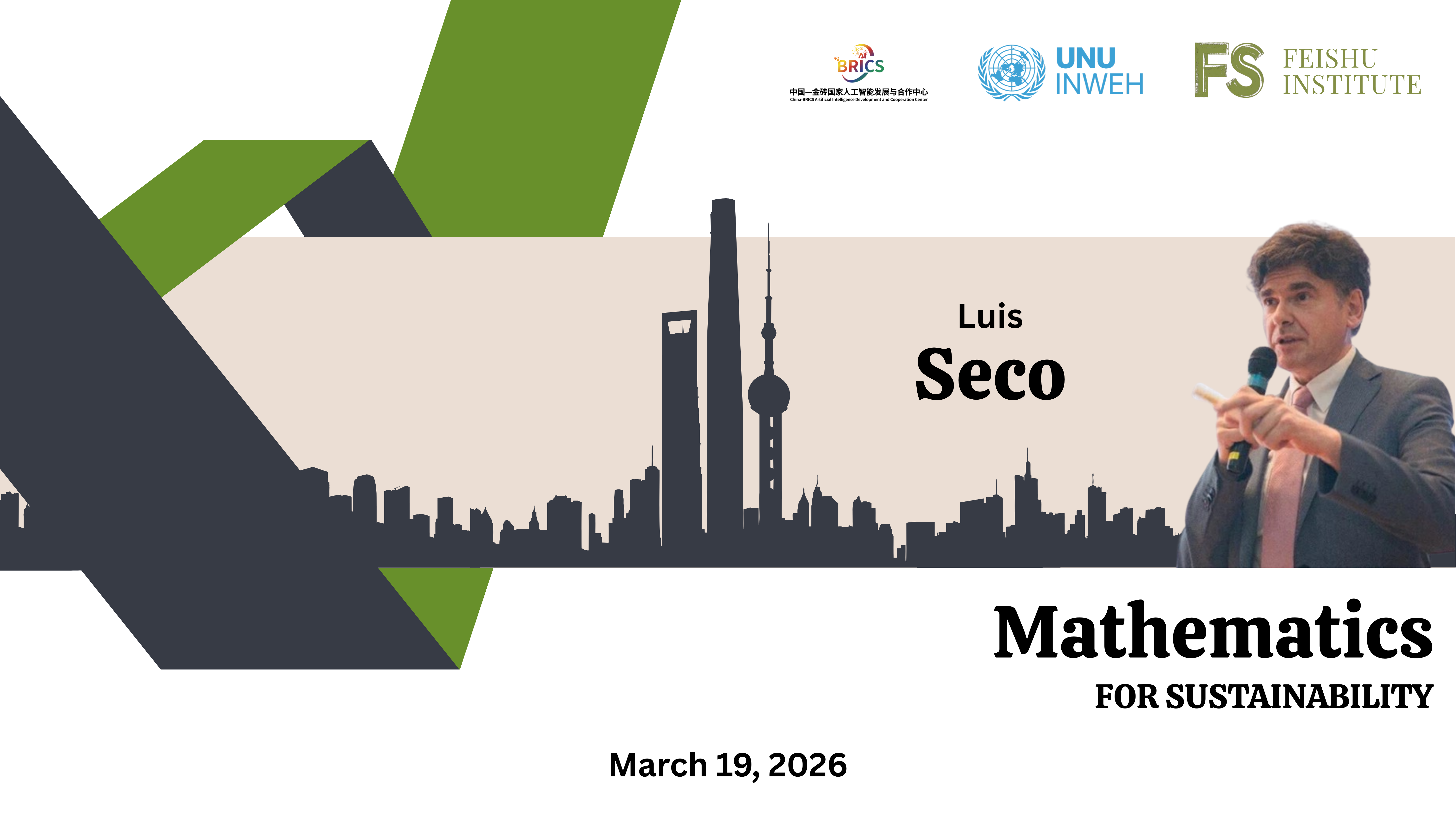


Mathematics serves as the foundation for major technological innovations and is a critical pillar in achieving the United Nations Sustainable Development Goals (SDGs). Feishu will host a lecture titled Mathematics for Sustainability in collaboration with the China–BRICS Center for Cooperation in Artificial Intelligence and Development, and with the support of the United Nations University Institute for Water, Environment and Health. This lecture will feature Professor Luis Seco, Director of the Master's Program in Mathematical Finance at the University of Toronto and Chair of the Centre for Sustainable Development at the Fields Institute. Professor Seco will focus on the core value of mathematics in addressing global sustainability challenges, delving into cutting-edge explorations and practical applications of mathematics in areas such as climate governance, clean energy, and resilient infrastructure. This lecture aims to contribute mathematical wisdom and strength to the implementation of the United Nations 2030 Agenda for Sustainable Development and to promote more robust, greener, and more balanced global development.
Information
- Date: March 19, 2026 (Thursday) 12:30 (UTC+8)
- Venue: Xinsong Middle School, No. 829 Xingmei Road, Minhang District, Shanghai
- Event type: In-person Lecture + Live Streaming
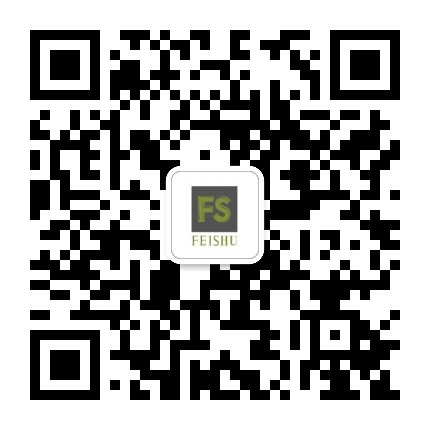
- Live Streaming:

Scan QR code above or copy the URL below to join the Zoom meeting
https://us02web.zoom.us/j/84456592492?pwd=5T8iG8vT832234xJFzfRVQMUEY4E0u.1
Meeting ID: 844 5659 2492
Passcode: 757577
- Speaker: Luis Seco
- Topic: Mathematics for Sustainability
Speaker Introduction
Luis Seco, Ph.D. in Mathematics from Princeton University, is Director of the Master's Program in Mathematical Finance at the University of Toronto, Chair of the Centre for Sustainable Development at the Fields Institute, Chair of the Canadian Spanish Scientists Association, Affiliate Professor at the Vector Institute, and Professor at the Technical University of Munich. He is an internationally renowned expert at the intersection of mathematics and artificial intelligence.
As a leading scholar in global sustainable development, Professor Seco has long been committed to addressing global challenges such as climate change, ecological protection, and green transition through mathematical modeling and artificial intelligence. Professor Seco builds rigorous quantitative analysis frameworks and promotes the transformation of mathematical theory into practice. Through his global research cooperation network, he connects international forces to address sustainable development challenges.
With a diverse perspective spanning academia, industry, and global governance, combined with top mathematical research results and rich practical experience in sustainable development, he will analyze the core applications of mathematics in climate governance, clean energy, resilient infrastructure, and other fields, outlining a feasible path to build a more sustainable future with mathematics at its core.
Lecture Abstract
Large language models, robotics, and artificial intelligence are visible expressions of how mathematics shapes our daily lives. Yet mathematics has been our scientific partner for thousands of years, providing the language through which we understand nature, structure, and change. In this talk, we will explore how mathematics continues to guide our interaction with the Earth and with one another. From modeling climate systems and energy networks to designing resilient infrastructure and intelligent technologies, mathematical thinking enables us to move from observation to prediction, from complexity to insight, and from crisis to sustainable solutions.
Sustainability is not only an environmental challenge — it is a systems challenge. Mathematics provides the frameworks that allow us to analyze interconnected systems, quantify uncertainty, and design strategies that balance growth, equity, and ecological limits. By bridging theory and application, mathematics remains one of our most powerful tools for building a more stable, intelligent, and sustainable future.